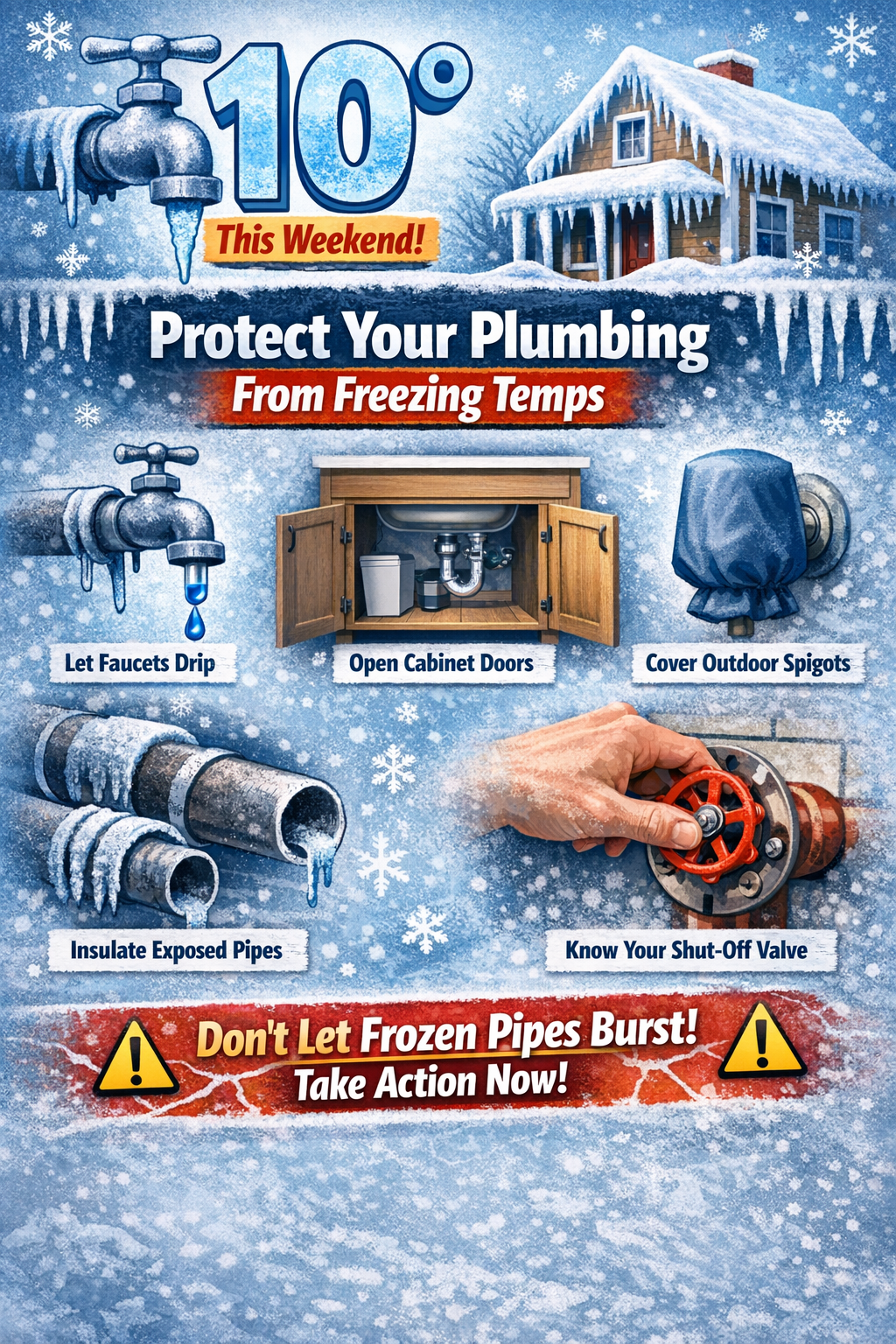
Pocomoke City and the Lower Shore are bracing for bitter cold this Saturday — with temperatures expected to plunge near 10°.
When it gets that cold, frozen pipes aren’t just “a possibility”… they’re a full-on plumbing ambush waiting to happen.
Frozen pipes can burst, flood your home, destroy drywall and flooring, and cause damage that’s expensive and stressful to repair. The good news? A few simple steps now can prevent a major disaster later.
Here’s what you should do before temperatures drop into the danger zone.
Why Pipes Freeze (And Why It’s a Big Deal)
When water inside a pipe freezes, it expands. That pressure has to go somewhere — and it often results in a split pipe that bursts once thawed.
Pipes most at risk include:
-
Outdoor spigots / hose bibs
-
Pipes in crawlspaces
-
Plumbing in unheated garages
-
Water lines near exterior walls
-
Older homes with limited insulation
How to Protect Your Plumbing Before the Deep Freeze
1) Let Faucets Drip Overnight
This is one of the easiest and most effective tricks.
A slow drip keeps water moving and lowers the chance of freezing.
- Best faucet to drip: one farthest from where your water line enters the house
- Keep both hot and cold running slightly if possible
- You’re aiming for a steady drip, not a stream
2) Open Cabinet Doors Under Sinks
If your sink plumbing is against an exterior wall (common in older homes), open the cabinet doors to let warm air circulate around the pipes.
???? Bonus tip: If it’s really cold, place a small safe space heater nearby (never unattended).
3) Cover Outdoor Spigots
If you haven’t done this already, do it today.
-
Disconnect garden hoses (seriously — don’t leave them attached)
-
Install insulated faucet covers (cheap and effective)
A hose left connected can trap water inside the spigot and freeze the line.
4) Insulate Exposed Pipes
Crawlspaces, basements, garages, and attics can feel like Antarctica in temps like this.
You can use:
-
Foam pipe sleeves
-
Pipe wrap insulation
-
Heat tape (for trouble zones)
Even a little insulation helps.
5) Keep Your Thermostat Consistent
Don’t turn the heat down too low overnight.
In cold snaps like this, your home needs consistent warmth to protect pipes.
- Keep your thermostat at least 55°–60°
- If you’re away, leave heat on (your pipes don’t care about your electric bill excuses)
6) Know Where Your Main Water Shut-Off Valve Is
If a pipe bursts, the fastest way to minimize damage is shutting off the water immediately.
Take 2 minutes today to locate:
-
Main shutoff valve
-
Water meter valve
-
Shutoff for outdoor lines (if you have one)
If you can’t find it… that’s your homework before Saturday.
What to Do If Pipes Freeze
If you suspect a pipe is frozen:
Signs include:
-
No water flow from faucet
-
Very low water pressure
-
Frost on visible pipes
-
Strange smells coming from drains
What you should do:
-
Keep faucet open (small flow if possible)
-
Apply gentle heat to the pipe:
-
Hair dryer
-
Heating pad
-
Warm towels
-
-
Do not use open flame (blowtorch = house fire speedrun)
If you can’t thaw it quickly or you see water leaking — call a plumber immediately.
A Little Prep Now = Avoid a Huge Mess Later
Cold like this is no joke for plumbing — especially in older homes and houses with crawlspaces common across Delmarva.
Take 20 minutes today and knock out the basics:
- Drip faucets
- Open cabinets
- Insulate exposed pipes
- Cover outdoor spigots
- Find shutoff valve
Your future self will thank you when your living room doesn’t turn into a swimming pool.